 Skip to content
Two stacker quotations may advertise the same warranty period while leaving different repair costs and responsibilities with the buyer.
Compare the written warranty for the exact offered stacker, battery and charger before ordering. Identify who provides it, when coverage starts, which components and costs it includes, and how a claim is assessed. Keep unanswered items separate from promises; a quoted period alone cannot define the repair package.

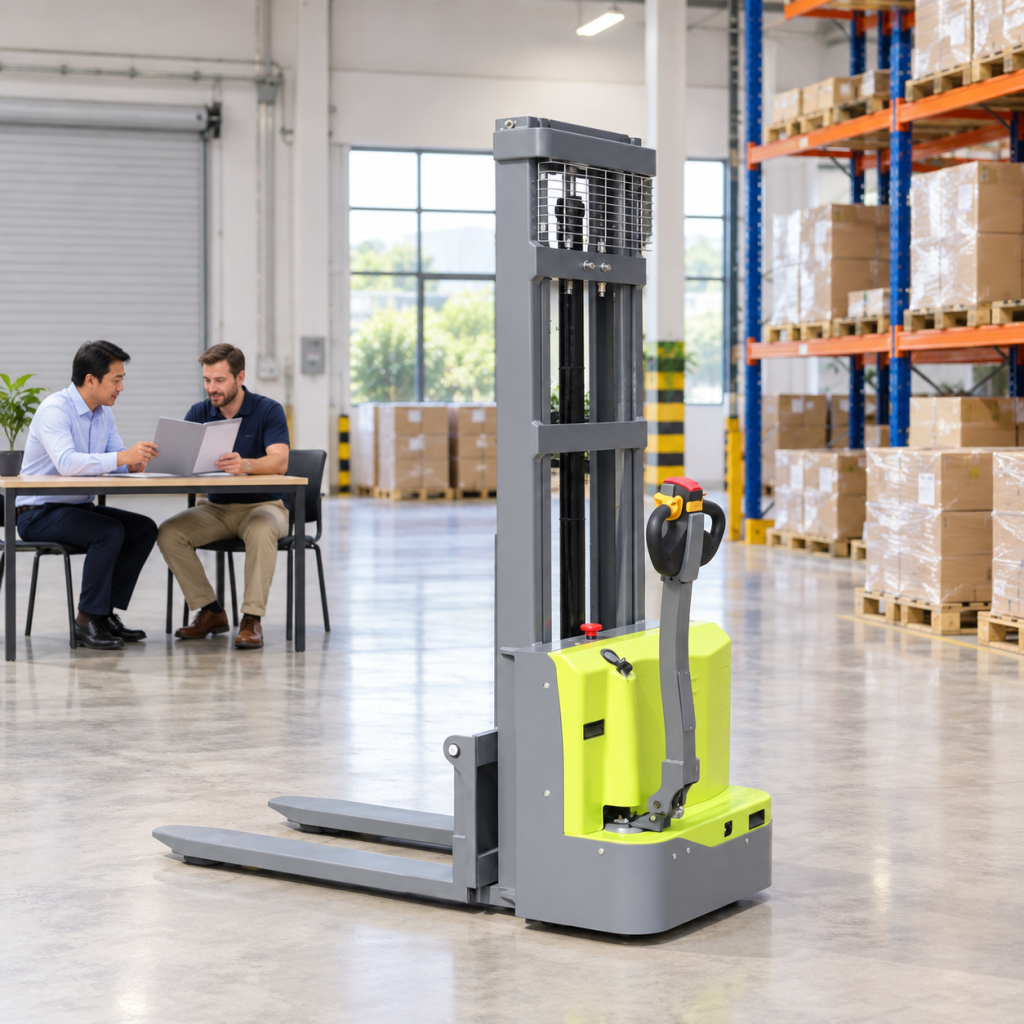
Generated planning illustration based on a company original; no actual warranty agreement or customer event is shown.
Whose warranty covers the truck in the quotation?
A distributor's sales phrase may not identify the party responsible for accepting a claim.
Ask for the issuing party, covered purchaser and exact equipment identity, together with the applicable document revision. Confirm the start event and any time or operating-hour conditions in writing. Separate the manufacturer, distributor and local service roles rather than assuming that everyone named in the sale provides the same coverage.
Start with the offer being compared. Does the warranty come from the machine manufacturer, the exporter, a distributor or a separate component supplier? The answer affects where a claim goes and which document governs the promised response. The buyer should retain the name and contact route of the responsible party with the accepted quotation. A photograph of a branded machine or a generic website statement cannot establish who has agreed to handle this particular order.
Tie the document to the offered configuration. A range name may include several mast arrangements, controls or battery packages. Record the model and build reference available at quotation, then require the delivered machine identity to be connected to that record at handover. If the supplier changes a component before shipment, ask whether the warranty document or claim contact changes with it. An unchanged truck name does not prove unchanged component coverage.
Clarify the start event without inventing one. Shipment, delivery, commissioning and acceptance are different events, especially when an export order spends time in transport or storage. The supplier's written terms should state the relevant event and the evidence used to date it. If coverage also uses operating hours, ask which record supplies that number and how the stated limits interact. Do not assume that the buyer may select whichever limit is more favorable.
The guide is a procurement checklist, not an interpretation of enforceable rights in every country. The actual agreement and applicable rules may need review by the buyer's responsible advisers. Here the practical task is to expose uncertainty before signing an order: identify the party, equipment, document and start condition. An unanswered warranty field should stay unanswered in the comparison until the supplier provides a usable statement.

Generated identity-review illustration; no serial-number verification or technical inspection result is shown.
Which components need their own coverage statement?
“Machine warranty” may not explain how a selected battery, charger or wear component is treated.
Separate the complete truck from batteries, chargers, fitted options and replacement parts. Ask which written terms cover each item, and distinguish a defect claim from ordinary wear or a scheduled service expense. Do not label a component excluded or included until the supplier's applicable document says so.
Build a short list from the actual quotation rather than every accessory in a catalogue. The offered mast, fork arrangement, power package and selected options should each have an identifiable place in the equipment record. Some items may fall within one truck document, while others may be addressed separately. That possibility is a question for the supplier, not a reason to presume that an electrical component has a shorter period or a mast always has full coverage.
Ask how normal wear and a suspected defect are distinguished in the claim process. Wheels, rollers and other items can experience ordinary service wear, but their name alone does not decide a particular claim. A damaged wheel could require a qualified assessment of the circumstances and component condition. The buyer should not call all wheel damage excluded, or all early damage a manufacturing defect, before the responsible provider has assessed the evidence under the actual terms.
The Toyota genuine-parts information illustrates that a manufacturer's parts offer can have its own warranty and service context. It is another brand's information, not coverage for a GODWIN or Jinge-reference stacker. This guide deliberately imports no Toyota period, labor promise or technician entitlement. Ask the offered stacker supplier for the documents applicable to its own machine and selected power package.
Keep options identifiable when comparing offers. A quote with one battery and an alternative with another may need different supporting documents even if both use the same general warranty heading. If a replacement battery is later supplied, retain its identity and applicable terms rather than assuming a new component renews the whole truck's coverage. Ask the provider how repaired and replaced items are handled; do not invent a reset rule from the date on a shipping label.
| Item in the actual offer | Written question | Avoid assuming |
|---|---|---|
| Truck and mast configuration | Which document covers this build? | One range-wide statement covers every option |
| Battery and charger | Same document or separate terms? | Matching voltage means matching coverage |
| Wheels and rollers | How are defect and wear assessed? | Every issue is covered or every issue is excluded |
| Fitted option | Who provides support and coverage? | The truck seller automatically covers a third-party option |
| Replacement item | What applies after repair or replacement? | The entire truck period restarts |

Generated scope illustration. The detached wheel and charger are generic props, not verified fitted or compatible parts.
Which repair costs are included rather than merely available?
A free replacement part can leave the buyer paying for diagnosis, labor or transport.
Separate diagnosis, parts, installation, technician travel, freight and any temporary replacement equipment in the written scope. Ask who pays initially and what authorization is required before work begins. Treat available service and covered service as different statements; neither a period nor a parts promise defines the complete cost of repair.
Use a plausible repair as a question, not as a fabricated case. Suppose an authorized provider confirms that a component needs replacement. The buyer still needs to know who supplies the part, who installs it, what documents the technician needs and how the truck is verified afterward. This hypothetical sequence contains no assumed GODWIN failure rate or warranty entitlement. It simply exposes the work that a component price may omit.
Diagnosis should be explicit. Does the offer include remote assessment, local attendance or only consideration of submitted evidence? Who chooses the service provider and authorizes costs? A distributor may be willing to help locate a technician without agreeing to pay that technician. State the actual commitment in the comparison rather than turning a helpful contact into a guaranteed included service.
Transport creates another possible boundary. A component could be shipped from a distant supplier while the machine remains at the buyer's site, or the proposed service process might require moving the truck. Ask who arranges and pays the relevant freight, insurance or other applicable transport items. Do not assume the original machine delivery terms answer every repair shipment. If a cost cannot be priced yet, identify the allocation of responsibility and the condition under which it will be agreed.
Ask separately about business interruption. A warranty document may address a component remedy without supplying a loan truck, a guaranteed restoration time or compensation for lost production. None of those benefits should be inferred from “after-sales support.” If the buyer needs a temporary machine or a defined service arrangement, request that as a separate written item. Comparing the confirmed scope may show that two similar periods offer different practical support, without claiming either supplier will always restore the truck faster.
| Repair stage | Confirmed scope needed | Remaining buyer question |
|---|---|---|
| Assessment | Authorized process and any charges | Who approves attendance and diagnosis? |
| Component remedy | Covered item and supplied kit | Are associated pieces included? |
| Installation and verification | Authorized work and cost allocation | Who can perform and record the repair? |
| Travel and freight | Arrangement and responsibility | Are location-dependent costs covered? |
| Operational interruption | Any separately agreed assistance | Is a temporary truck actually promised? |

Generated cost-scope illustration; the props do not establish included labor, freight or service.
What use and maintenance conditions must the buyer understand?
An attractive period is difficult to assess when the offer leaves the permitted application or required records unclear.
Ask for the operating and maintenance conditions attached to the actual coverage, including any required records or authorized service arrangements. Compare them with the buyer's intended work before ordering. Keep manufacturer instructions and warranty terms distinct; neither authorizes unsafe operation or an undocumented modification.
Describe the intended application to the supplier: loads, rack work, environment, shifts and selected battery package. The supplier should know the proposed use before confirming its offer. This is not a claim that any particular duty automatically invalidates a warranty. It lets the buyer ask whether the written terms contain a relevant condition and whether the offered configuration is intended for that duty in the first place.
Request the relevant operator and maintenance documents with their revisions. A generic blog service interval should not become the record against which a machine-specific claim is judged. Ask which tasks belong to operators, which require qualified personnel and what maintenance evidence the provider expects. The exact instructions determine the work; the warranty document defines its stated relationship to coverage. If either document is missing, keep that part of the comparison open.
Record configuration changes and the approvals behind them. A battery substitution, fork change or added accessory can create questions about compatibility, safe use and coverage. Those are related but separate decisions. Do not let a sales message approving one aspect stand in for the other two. Ask the responsible supplier to identify which configuration it supports and what written conditions apply after the proposed change.
Keep records useful rather than burdensome. A dated service entry should identify the machine, task, person and relevant finding. Retain actual invoices and authorized work reports where required by the agreement. Do not manufacture a checklist of compulsory evidence that no supplier has requested, or claim that one missing photograph automatically defeats a claim. The buying decision is whether the documented requirements are clear and practical for the site's maintenance arrangement, and who will maintain the records after delivery.
How should a claim move from observation to a decision?
Reporting a symptom and receiving a replacement recommendation are different steps.
Request a claim contact, initial evidence list, assessment process and approval route before work or shipment is arranged. Record the observed symptom without guessing the failed part. Keep an unsafe truck out of normal use under its applicable instructions and site procedure; warranty discussion cannot grant permission to operate it.
The operator's first account should preserve what happened, when it began and the machine's status. Machine and component identities, visible indications, photographs taken safely and any relevant service history can help the responsible provider assess the request. Send sensitive serial and customer details through the private support channel. A public buyer article or social-media photograph is not the place to assemble a claim file containing private site information.
Ask the provider what additional evidence can be collected safely and who is authorized to collect it. Do not operate an unsafe truck, bypass an interlock or dismantle a component merely to complete a warranty form. The provider may require a qualified assessment before deciding whether a remedy falls within the written scope. That assessment is not interchangeable with an operator's theory that a pump, wheel or controller has failed.
Clarify permission for work and returned items. If the provider requests a local repair, ask who authorizes it and how costs are agreed beforehand. If a part must be returned, obtain the applicable handling and shipment instructions rather than assuming any parcel service can carry it. Battery or other component transport may involve separate requirements; the buyer should use the responsible transport and service process, not a blog-generated shipping recipe.
Keep the decision and technical closure together but distinguish them. A claim can be accepted, declined, partly accepted or left pending more evidence under the actual terms. Separately, the truck requires the appropriate technical checks before returning to ordinary work. Record the provider's reason, authorized work, fitted part identity and responsible return-to-service decision. Do not report a warranty remedy as proof that every other condition of the truck has been assessed.
| Claim record | Purpose | Responsible source |
|---|---|---|
| Machine and offer identity | Connect event to actual covered equipment | Buyer records and accepted offer |
| Observed symptom and status | Preserve facts without diagnosis | Operator and site supervisor |
| Requested assessment | Define safe evidence and qualified work | Responsible provider |
| Coverage and cost decision | State actual accepted scope | Issuing party or authorized delegate |
| Technical closure | Document repair and permitted return to work | Authorized service/site process |

Generated claim-record illustration; no actual fault, diagnosis or accepted claim is shown.
How should the warranty comparison enter the purchase record?
A clarification in one email can be lost when a revised quote changes the machine or support scope.
Compare offers in a common scope table, with each item marked confirmed, conditional or unanswered and linked to its document. Carry accepted clarifications into the final order and handover record. Recheck the warranty when the build, destination or service arrangement changes; do not fill remaining gaps with optimistic assumptions.
Begin with the practical requirements rather than awarding points for the longest advertised period. A buyer without a local authorized service arrangement may value a clear installation and assessment route more than a headline extension whose costs remain unknown. Another site may have its own qualified maintenance team but need explicit parts and document support. These are different procurement priorities, not evidence that one supplier's warranty is universally superior.
Place coverage and service availability in separate columns. Record the issuing party, start event, applicable components, stated limits, cost allocation and claim route. Attach each response to the current document revision. If the supplier gives a verbal clarification, request its inclusion in a written response before relying on it. A missing field is a decision gap; it should not be treated as a zero-cost benefit or a reason to invent an exclusion.
Review the final configuration before release of the order. If a different battery or mast has been selected, compare the applicable documents again and identify what changed. At handover, connect the delivered identity to the accepted offer and give the operator or maintenance owner the correct instructions and support contact. The warranty comparison should remain usable after purchasing staff have moved to another order.
The GODWIN contact page provides a route for an exact-order discussion. Send the proposed stacker configuration, destination, intended use and the unresolved coverage questions. This guide states no GODWIN warranty period, coverage promise or claim result because no order-specific terms have been provided. Obtain those terms from the responsible supplier, and have any legal or contractual question assessed by the buyer's appropriate adviser before treating it as settled.
Conclusion
A useful warranty comparison identifies the covered equipment, responsible party, included remedy and costs, operating conditions and claim route. Keep the written scope with the accepted configuration and service records. The buyer can then compare actual commitments instead of assuming that matching periods mean matching support.



 English
  Español
  Français
  العربية