 Skip to content
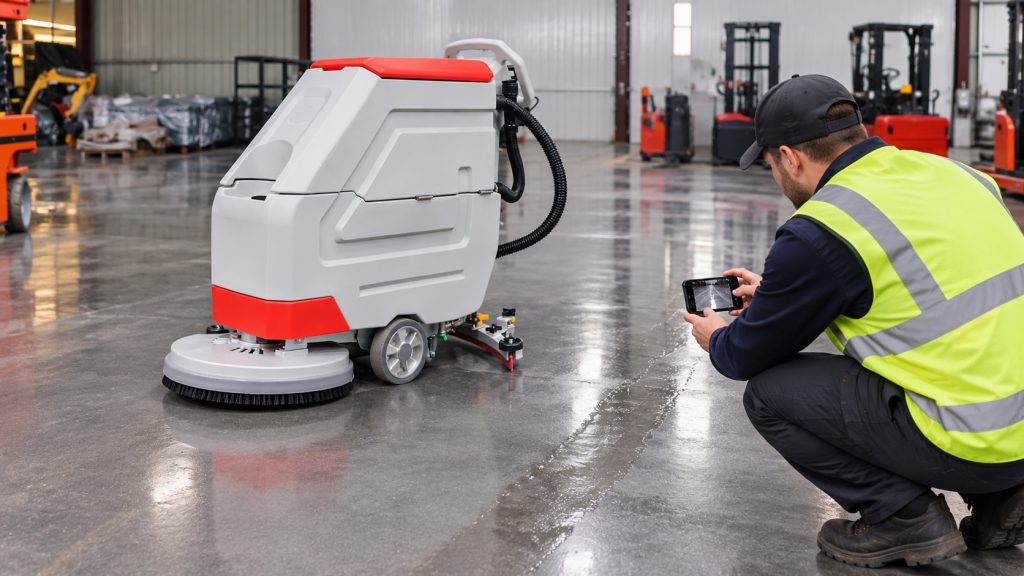
I can tell a supplier that water is left behind, but that phrase alone does not show where the trail starts or which machine needs help.
Send clear photos of the exact machine identification, full rear recovery area, water pattern on the floor, safe visible condition of the squeegee and recovery path, and any displayed warning. Add a short video and timeline where useful. Stop for unsafe leaks or faults, and avoid disassembly just to obtain images.
The water-recovery troubleshooting guide explains possible causes. This article focuses on collecting evidence so the supplier can choose the next safe question.
Which Identification Photos Should Come First?
I do not want service advice for a similar-looking model when the delivered machine has a different configuration.
Begin with an overall machine photo and a readable image of its nameplate or model and serial label. Include the order or delivery reference and relevant battery or accessory identity. Share only information needed for service, and keep original files so the supplier can verify the exact unit.

Take the overall photo from a safe stationary position with the complete machine visible. Include the brush end and rear squeegee if possible. A service technician can then understand the operating form and whether obvious accessories are fitted. Next, photograph the nameplate close enough to read the model and serial number. If labels are hidden behind a panel that operators are not allowed to open, do not remove the panel solely for a photograph; provide the purchase record and ask how the supplier wants the identity confirmed.
Record the delivered configuration in text as well. Battery, charger, squeegee, hose, brush, pad holder, and optional equipment may differ between orders. The exact parts and control layout are not guaranteed by the model name alone. If the recovery symptom began after a part replacement, include the approved part identity and the date of work.
Historical website pages can confuse product names. An older GDW2 page, for example, does not automatically describe a current GDW2Z delivery. A clear label photograph lets the support team work from the actual unit rather than guessing from web pictures. Keep any order number or purchase invoice in the private service channel; it does not need to be posted publicly.
| Identification view | Show | Avoid |
|---|---|---|
| Whole machine | Both ends and overall configuration | Cropping out the rear recovery area |
| Nameplate | Model and serial readable | Guessing from body appearance |
| Relevant accessories | Installed squeegee, hose, brush package | Assuming accessories from catalogue image |
| Service history | Approved part and work date in text | Unverified compatibility claims |
These images start the case. They are not evidence that a fault belongs to a particular component.
How Should the Water Pattern Be Shown?
I can make a narrow trail disappear in a close-up, so I need views that show its position behind the machine.
Photograph the floor before and immediately after a representative pass, showing the machine's direction, trail width, location, and nearby joints or obstacles. Add a close view of the affected area and a wider context view. Use comparable light and keep the floor safe under site procedures.

Choose a short, safe section of the usual cleaning route. The operator should not run the machine merely to manufacture a dramatic failure if there is already an unsafe condition. Record whether the trail is centered, on one side, intermittent, or only at a turn. A thin line along a floor joint can have a different explanation from a broad puddle across the whole path. The image should show enough area for that distinction.
Photograph from behind and slightly to one side after stopping, with a reference such as the machine or known floor joint in frame. A second image closer to the trail can show whether it is a thin film, streak, or standing water. If the site uses a moisture acceptance standard, record it in text. A photo alone cannot measure slip resistance or prove that a surface is safe to reopen.
Keep lighting consistent. Reflections from polished floors can resemble water, while uneven light can hide a real trail. A short video of one permitted pass may show when the symptom begins and whether it changes at a turn. Do not stand in the machine's path, walk backward through active traffic, or cross a wet area for a better shot. The site safety lead controls signs and isolation.
Note what happened before the photo: floor material, soil, solution and pad, whether debris was collected, approximate tank level, and whether the symptom began immediately or later. This context helps the supplier distinguish a recurring machine issue from a single site condition.
What Recovery Components Can Be Photographed Safely?
I want to show visible dirt or damage, but I should not dismantle the recovery system to make the case look complete.
With the machine stopped and isolated as the delivered manual directs, photograph only operator-accessible visible parts: the rear squeegee, blade edge if safely visible, connected hose, recovery tank opening or screen where permitted, and any obvious damage or debris. Leave hidden electrical and mechanical assemblies for qualified service.

The rear squeegee is usually the first useful exterior view because it contacts the floor and directs recovered liquid. Photograph it from behind at a safe angle, showing whether the blade appears folded, obstructed, torn, or uneven. Do not reach under a powered or unstable machine. If the manual permits a routine operator inspection, follow its sequence and record what was found.
Show the visible recovery hose and its connections. A kink, detached end, or external damage may be apparent; a photo can support a question, but it does not prove internal blockage or vacuum performance. Do not disconnect a hose simply to obtain a better image unless the delivered manual authorizes the task and the machine has been made safe.
The recovery tank, lid seal, screen, or float may be accessible for normal emptying and cleaning on a particular model. If so, a photo before cleaning and another after permitted care can be helpful. Record any foam or unusual debris. Do not open sealed service covers, test live vacuum parts, or bypass a full-tank shutoff for a video. The exact model instructions determine access.
If there is evidence of a leak or electrical issue, stop the image collection at a safe exterior view. Contain the floor condition under site rules and ask the supplier for qualified next steps. A service package should support diagnosis, not turn an operator into a repair technician.
Which Warning and Timing Details Matter?
I can send ten photos and still omit the warning display and the moment the recovery failure began.
Capture any warning screen or indicator as it appears, plus a written timeline: when the symptom started, whether it is constant or intermittent, what route conditions trigger it, and which permitted checks changed it. Include tank level, recent maintenance, and unusual sound or foam without assigning an unverified cause.

A warning may disappear after a restart, so photograph it when safe. Do not keep restarting a faulty machine solely to reproduce a code. Write the exact displayed text or symbol, machine model, and approximate time. If the indicator is not legible, include a wider photograph that shows where it appears on the controls and a separate note describing it.
The timeline should be plain: “The floor was normal for the first aisle; a left-side water line appeared after a turn; recovery tank was approximately half full; operator stopped and checked the visible squeegee under the manual.” That statement records observation without claiming the turn caused the fault. If an authorized adjustment or cleaning was made, record the before/after effect and who performed it.
Include recent changes. A new pad, squeegee blade, hose, chemical, operator, or floor coating may matter. A prior repair can also change the service path. Do not assume the latest change is the cause; it is one fact for technical review. If the machine has been idle or transported, say so.
| Timeline field | Useful detail | What it prevents |
|---|---|---|
| First occurrence | Date, shift and route point | Vague “recently” history |
| Pattern | Constant, one-sided, turning or intermittent | Lost symptom distinctions |
| Indication | Photo and exact warning | Guessing a fault code |
| Recent change | Part, cleaner, operator or floor | Missing context |
| Safe check | Manual-permitted action and result | Repeating known steps |
Keep original filenames and timestamps if possible. Edit copies only to protect private information, not to change the symptom.
A short video can supplement still photos when the trail appears only during a turn or after several minutes, provided filming does not distract the operator or expose others to a wet floor. Identify the exact segment and time in the video. If a warning vanishes quickly, photograph it safely while the machine is stationary. The service team needs the actual indication and sequence, not a reconstructed message from memory.
How Should a Useful Service Package Be Sent?
I want one coherent case that a technician can review without asking for each missing piece separately.
Send a message with machine identity, order reference, site and floor context, symptom timeline, operational impact, and a numbered set of original photos or short videos. State what has been checked under the manual and whether the machine is stopped. Use the supplier service channel for private records.
The company knowledge base describes an after-sales process that begins by acknowledging the issue, collecting model, serial, configuration, use environment, prior operation, photographs and video, then coordinating technical review and follow-up. It does not support a diagnosis or warranty decision from a photo alone. Product, contract, battery, consumable, and third-party boundaries still need review for the actual order.
Organize the package in a sequence that matches the story. For example: 01 whole machine, 02 nameplate, 03 full floor trail, 04 close trail, 05 rear squeegee, 06 visible hose or tank area, 07 warning display. A short video can show the progression if it is safe to film. Avoid sending dozens of duplicates; include the angles that answer different questions.
State the site's impact: whether cleaning has stopped, whether an area is isolated, and whether a substitute method is in use. That helps the supplier prioritize the case without making a false claim about cause. If the machine is stopped for safety, do not restart it because the service team asks for “one more video” until a qualified person has approved the step.
The published GODWIN after-sales process guide explains the communication route. Record the case reference, the technical response, approved next actions, parts identification, and eventual outcome. A closed case should state whether the symptom was resolved and confirmed by the user, not merely that a part was shipped.
What Should the Team Do After Sending Evidence?
I do not want a photo package to become a substitute for protecting the floor or recording the eventual result.
Keep the affected area safe, preserve original evidence, and follow the supplier's approved next steps. Let qualified personnel handle disassembly, electrical checks, or uncertain parts. After action, repeat the same short route and floor photographs to confirm whether recovery has improved, then close the case with a recorded result.
If water remains on a traffic floor, apply the site's warning and isolation procedure and use an approved alternative cleaning method. Do not simply leave the area for a later shift. If the machine is parked, mark its status so another operator does not unknowingly use it. Preserve the initial condition and maintenance record for technical review.
The supplier may ask for another safe exterior view or an operator-permitted check. Confirm that the request matches the delivered manual and site authority. If it involves a cover, live electrical part, internal hose, or component replacement, a qualified technician should perform it. A generic online instruction, including this article, is not an approved procedure for every GODWIN configuration.
When an authorized correction is made, document what changed, who did it, and which part was used. Run the same representative route with the same floor-care method if safe. Compare the new water pattern with the original photos. If the symptom persists, update the case rather than declaring success because the machine started once.
| Closure item | Evidence | Decision |
|---|---|---|
| Approved action | Service note and part identity | Confirms what changed |
| Repeat route | Same area and method where possible | Tests effect |
| Floor result | Comparable after photo | Confirms water recovery |
| Operator feedback | Shift notes | Checks normal usability |
| Final status | User and supplier record | Closes or reopens case |
Keep the evidence for future diagnosis and training, with access limited to those who need the service record. A well-documented case can improve both the repair and the next maintenance decision.
Conclusion
Show identity, pattern, visible condition, warning and timeline; protect the site and let qualified service decide the repair.


 English
  Español
  Français
  العربية