 Skip to content
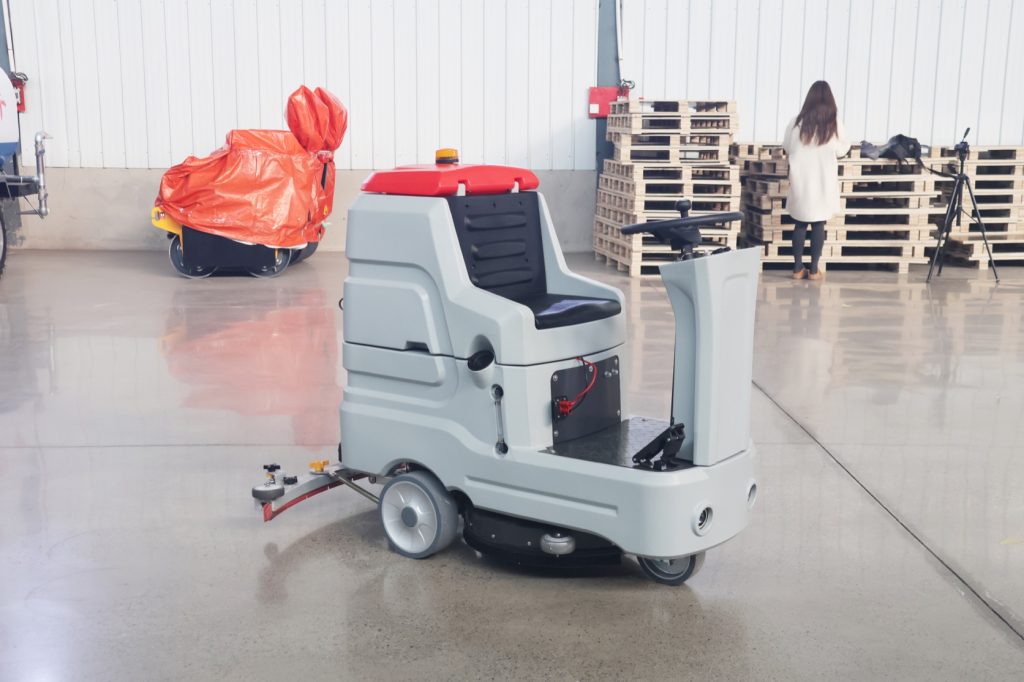
I can see a wider GDW7 on paper, but I still need to know whether it can turn, clean edges, and finish within my site's window.
The current GODWIN catalogue lists GDW5 with a 500 mm working width and 830 mm squeegee, and GDW7 with a 700 mm working width and 1000 mm squeegee. Both list 80 L solution and 100 L recovery tanks. Choose from access and a controlled site trial, not width alone.
This article compares two current ride-on models. It keeps legacy GDW5 specifications separate from the controlling catalogue and treats field performance as something to measure.
Which Catalogue Differences Can Buyers Confirm?
I need the exact current figures before considering whether a wider machine adds value to my route.
GDW7 has a wider cleaning path and squeegee than GDW5; both have the same printed solution and recovery capacities. The current catalogue lists a 700 W drive motor for each. These fields describe named products, but do not establish effective area per hour, battery endurance, turning clearance, or cleaning quality.

The current formal GODWIN floor-scrubber catalogue is the basis for this comparison. GDW5 is listed at 500 mm working width, 830 mm squeegee width, 80 L solution capacity, and 100 L recovery capacity. GDW7 is listed at 700 mm, 1000 mm, 80 L, and 100 L. The 200 mm working-width difference can matter on long, unobstructed passes, but it is only one input to a complete cleaning route.
Brush width and squeegee width serve different jobs. The first indicates nominal cleaning-head coverage; the second helps recover liquid behind the machine and may govern passage through an opening. An operator's overlap and path geometry determine actual coverage. A wider head can reduce pass count on open floors while complicating some tight edges and turns. That tradeoff must be observed, not asserted from dimensions alone.
Same tank volumes mean neither model has a catalogue advantage in those two nominal capacities. Even then, actual refill and emptying intervals depend on water setting, soil, cleaning method, and site rules. A buyer should time stops during a representative trial. The printed 700 W drive motor for both does not establish identical handling or traction under every floor condition.
| Current catalogue field | GDW5 | GDW7 | What to test |
|---|---|---|---|
| Working width | 500 mm | 700 mm | Pass count and edge work |
| Squeegee width | 830 mm | 1000 mm | Access and water recovery |
| Solution tank | 80 L | 80 L | Refill pattern on the route |
| Recovery tank | 100 L | 100 L | Disposal stops and procedure |
| Drive motor power | 700 W | 700 W | Handling on the approved route |
The table is a shortlist tool. It is not a declaration that one model is “more efficient” at every site.
Where Can a Wider Machine Lose Time?
I can save a pass in a straight aisle and then spend it all at the next turn or blocked corner.
Check doorway and aisle clearance, turn geometry, reverse maneuvers, edge access, and travel between cleaning zones with the full working machine. The 1000 mm GDW7 squeegee can be a limiting dimension even though its 700 mm working path looks attractive. Test the actual ordered configuration.

Begin at storage and trace every movement through cleaning, refill, recovery-water disposal, and return. Record the narrowest door, corridor, lift, aisle, and parking position. Measure after permanent guards and normal temporary stock are included. A nominally wide aisle might contain pallets during the cleaning shift. A rider also needs safe sight lines and space to mount or dismount under site rules.
The catalogue prints an overall dimension sequence of 1440 × 830 × 1170 mm for GDW5 and 1440 × 1000 × 1170 mm for GDW7. The knowledge record retains those numbers but flags that exact axis definitions, tolerances, and operating or transport state are not fully published. Do not approve a tight doorway from the middle figure alone. Ask for a dimensioned drawing that identifies squeegee position and options, then stage a physical access check.
Observe several normal turns. The machine may need reverse travel or extra alignment in a short bay. Record time and safe operating space. The broader machine may also leave a different strip near walls or racking; identify who handles that work. A wider path is valuable only when it contributes to the total completed job. The site survey gives a way to record these points consistently.
If the route is mostly narrow rooms or dense obstacles, consider whether a walk-behind machine or a mixed plan belongs on the shortlist. The operation-form guide explains that decision without applying a fixed floor-area threshold.
How Should Real Cleaning Time Be Compared?
I do not want a theoretical square-metres-per-hour figure to hide overlap, stops, and the work left at edges.
Time both models on the same representative floor, soil, approved cleaning setup, and complete route. Separate active passes, turns, extra passes, refill, disposal, traffic delays, and end-of-shift care. Compare finished area and acceptable floor result over total elapsed time, not catalogue width multiplied by travel speed.
Choose a test route before the machines arrive. Include an open stretch where GDW7's wider path can help, a normal narrow section, at least one turn, and relevant edge work. If one model cannot enter a zone, include the alternate cleaning method in its total process. The cleanable area excludes fixed storage and other surfaces the machine never touches.
Record the exact brush or pad, solution, and water setting used for each model. The floor owner must approve the method. A difference in consumables can change the result, so identify it rather than crediting the chassis alone. Use trained operators and a safe window that resembles normal operations. A single brief trial cannot prove a full battery shift, but it can reveal route geometry and handling issues.
Use a simple log with timestamps for preparation, first pass, tank stops, interruptions, completion, and care. Photograph the floor before and after under similar lighting. Note any extra pass to remove soil or recover water. If a squeegee is damaged or a machine needs adjustment, follow its delivered manual and record the correction before repeating the affected run.
| Route event | Evidence to record | Why it changes the result |
|---|---|---|
| Straight passes | Area, overlap and count | Tests width benefit |
| Turns and reverse | Time and route notes | Tests maneuvering cost |
| Edge work | Remaining area and method | Captures work outside main path |
| Tank and traffic stops | Cause and duration | Explains elapsed time |
| Floor finish | Soil and moisture record | Ensures speed has useful output |
Our actual cleaning-time guide develops the worksheet. Avoid presenting the result from one site as a universal GODWIN productivity claim.
What Does the Operator Need to Verify?
I need the operator to report visibility, controls, and routine care, not just whether the machine feels fast.
Have trained operators review sight lines, control reach, starts, stops, turns, reversing, refill access, approved disposal, and end-of-shift cleaning. Confirm both machines' delivered manuals and site traffic procedures. A model that is fast on an empty floor may still fit poorly in normal shared operations.

Ask the operator to follow the same route with both machines where practical. Observe how easily the machine is positioned before a pass and how predictable the stop is near people or equipment. A ride-on unit creates different visibility and traffic interactions from a walk-behind unit. The site's safety lead should define safe routes, signs or barriers, and access restrictions. Never pressure the operator to run at a demonstration speed that conflicts with local traffic controls.
Tank service deserves hands-on review. Confirm the approved clean-water fill point and wastewater disposal route. Check whether the operator can access the points used for normal care without an unsafe posture or spill. Record how long each step takes. A larger body can affect storage, charging, and movement to service areas even when the nominal tank sizes match.
The current model knowledge supports common manual principles for pre-use checks and cleaning, but not every control layout, electrical repair, parts mapping, or delivered battery detail. Ask for the exact manuals and nameplate details for the offered units. Where the document differs from the demonstration machine, have the supplier explain the revision before making the purchase decision.
Check operator feedback alongside objective evidence. “Feels easier” can identify a genuine issue, but the team should state what caused it: steering, foot position, visibility, noise, tank access, or a particular turn. This creates a serviceable finding rather than a vague preference. If more than one operator will use the machine, gather more than one perspective.
Why Should Older GDW5 Tables Be Ignored?
I can find older figures online, and I do not want a mixed-source spreadsheet to distort the comparison.
Use the current GODWIN catalogue for model parameters. Historical GDW5 material prints a 550 mm working width and 90 L solution tank, whereas the current catalogue prints 500 mm and 80 L. Do not combine historical values with current GDW7 data or assume an older page describes the delivered revision.
The difference is material. A comparison based on the old 550 mm width would shrink the apparent gap between GDW5 and GDW7; the old 90 L tank would create a false tank advantage for GDW5. Neither belongs in a current-model table unless the supplier is expressly quoting a historical or different revision and provides controlled documentation for that specific offer.
The safest purchasing record names the catalogue revision, exact model, quoted configuration, and any deviations. If a supplier offers a feature shown in an older photograph, request confirmation that it is included now. A model code alone does not establish the battery chemistry, charger, brush, accessories, service parts, or warranty terms. Those remain order-specific.
Online performance and runtime figures also need scrutiny. The formal current catalogue provides reference values but does not publish a common test method that proves site output for both candidates. Use a site trial and a documented shift plan. The battery selection guide explains why a chemistry label is insufficient, and the quotation guide identifies the supply lines to compare.
When a discrepancy appears, keep it visible. Ask the supplier which revision controls the quote and whether the demonstration machine matches. Do not silently “average” two values or select the one that makes a preferred model look better.
Which Model Belongs in the Final Proposal?
I can justify a final recommendation only when the site trial and supplied scope support it.
Advance GDW5 or GDW7 when it meets the route, floor result, operator, schedule, and service requirements at an acceptable total cost. GDW7's wider path may favor open passes; GDW5 may fit constrained routes. Neither outcome is universal, and unresolved configuration or access questions should remain conditions of the proposal.
Write a short decision record. Include floor and soil, cleanable area, most restrictive access, working window, machine configuration, trial conditions, time log, floor outcome, operator feedback, and open risks. If the site has separate open and narrow zones, a mixed-machine or mixed-method plan may be more honest than making one ride-on machine responsible for every corner.
Compare complete offers. Request battery and charger identities, included consumables, manuals, training scope, spare-parts information, delivery basis, and warranty terms. The same nominal machine price can represent different operating packages. Do not claim a fixed payback period without the buyer's actual labor, consumable, energy, repair, and downtime assumptions.
| Final gate | Evidence needed | Next action if missing |
|---|---|---|
| Model identity | Current product data and exact quote | Resolve revision |
| Access | Measurements and physical route check | Retest with working squeegee |
| Cleaning result | Comparable trial photos and notes | Adjust approved method |
| Total time | Full route log | Repeat under normal conditions |
| Support package | Manuals, battery/charger, parts route | Obtain written scope |
Send GODWIN the measured site information and trial findings when requesting the final proposal. A supplier can check a documented requirement; it cannot responsibly guarantee the site's result from brush width alone.
Retain the rejected candidate's record too. It may become relevant if the route, staffing, or permitted cleaning window changes later.
Ask the buyer's operations team to confirm where the winning machine will be stored, charged, filled, and emptied. These movements can decide whether a wider rider saves time in the whole shift. If the shortlist is still close, run another trial during a normal traffic period rather than extrapolating from an empty facility. The procurement record should state which route and floor standard supported the choice and what was left untested.
Conclusion
GDW7's wider path and squeegee distinguish it from GDW5; the real route, cleaning result, and ordered package decide.


 English
  Español
  Français
  العربية