 Skip to content
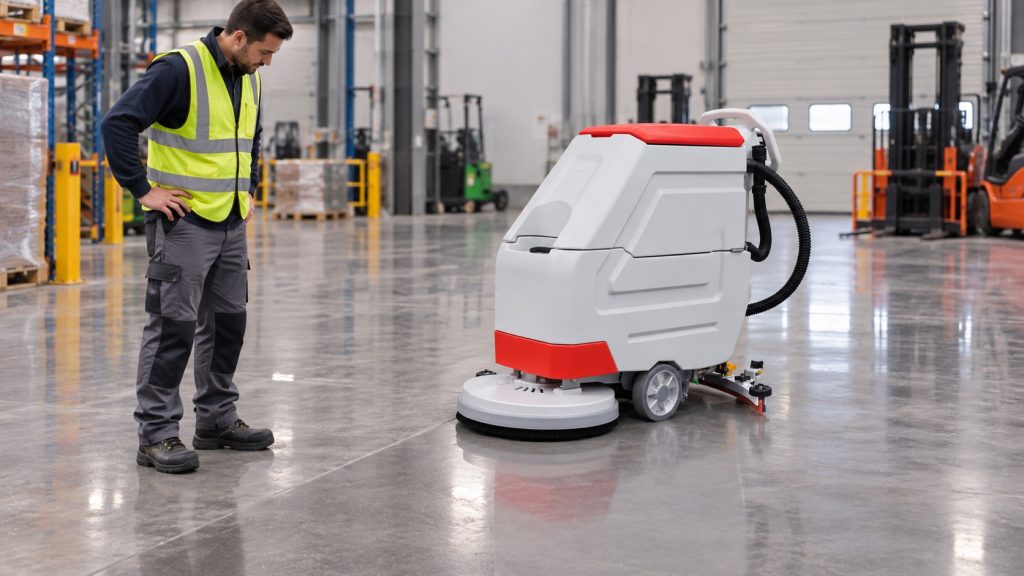
I see a nearly dry brush path and want to turn up the control, but I first need to know whether the tank, setting, or supply path is the cause.
Low solution flow can come from an empty tank, closed or low flow setting, visible blockage, unsuitable filling practice, or a component fault. Stop safely, identify the exact model and delivered manual, and perform only permitted operator checks. Escalate persistent, leaking, electrical, or inaccessible problems to qualified service.
This is a symptom guide, not a universal repair procedure. The water-left-behind guide covers recovery problems; low solution delivery is a different path.
What Does Low Water Flow Look Like?
I can mistake poor soil removal for low solution flow even when the real issue is the pad or floor-care method.
Observe whether little or no solution reaches the floor, whether flow is uneven, and whether the symptom is continuous or intermittent. Compare the result with the selected flow setting and normal approved operation. Record where the path first appears dry, and stop if leakage or unexpected machine behavior occurs.

Do not begin by opening covers or adjusting hidden components. First note what the machine is doing on a suitable approved test area. Does water appear when the scrub head is engaged under the manual's normal sequence? Is one side consistently drier? Does the flow begin normally and fade after a few minutes? Does the display show a warning? The answer can help distinguish a setting, a supply restriction, and a more complex fault.
Check the floor result from a safe position after stopping. A surface that remains dirty may have received normal water but the wrong approved contact material or insufficient dwell time. Conversely, a machine may leave a dull, uneven wet pattern because solution distribution is irregular. Avoid treating every poor cleaning result as a plumbing fault.
The delivered GODWIN manual and exact control layout matter. Current product data identify models but do not establish one solution-system component arrangement for all of them. A generic manual may describe a common check, but it cannot prove the position of a valve, filter, or solenoid on every delivered unit. Record model and serial information before asking for help.
Tennant's 5680 operator manual lists an empty solution tank, switched-off flow, a dirty solution filter, and component faults among possible causes on that machine. This supports a logical triage order, not a claim that GODWIN shares its parts or repair steps.
| Observation | Possible category | Safe next action |
|---|---|---|
| No solution on entire path | Supply or setting | Check tank and visible controls per manual |
| Uneven or intermittent wetting | Distribution or restriction | Record pattern; check permitted visible items |
| External leak | Hose, tank or connection issue | Stop, contain per site rules, request service |
| Poor cleaning with normal wetting | Floor method or contact | Review approved pad, soil and solution |
Take a short video only from a safe location. Do not keep operating to create a more dramatic symptom.
Which Supply and Control Checks Come First?
I want to rule out the simple conditions before a technician is asked to investigate hidden plumbing.
With the machine stopped as the delivered manual directs, confirm the solution tank contains the approved mixture and the flow control is enabled at the correct setting. Check that caps and visible parts are correctly seated. Do not add chemicals, bypass interlocks, or open an electrical enclosure to force flow.

Check the tank level and filling record. A sight indication may be absent, unclear, or different from the actual usable volume, so use the manual's approved method. Confirm that the operator filled the solution tank, not the recovery tank. Use clean water and only a floor- and machine-approved cleaning solution at the specified dilution. A reused dirty filling container can introduce debris to a solution path.
Next, review the normal operator controls. Some machines deliver solution only while certain functions are active; others have a separate flow setting. Use the exact control instructions supplied with the unit. Do not infer that another model's icons, button sequence, or default setting apply. If a new operator is unsure, have a trained person demonstrate the intended sequence before diagnosing a fault.
Check for obvious external conditions: a cap left loose, a visible kink in an accessible hose, or a disconnected part that the operator is allowed to inspect. Stop work if there is liquid outside the intended path, especially near electrical components. Do not reach under moving parts, put hands into a powered brush area, or work beneath a raised machine without approved controls.
If the tank is filled and the controls are correct, run only the brief functional check the delivered manual permits. If flow remains absent, document the outcome and move to service triage. Increasing a setting to maximum or pouring more detergent into the tank is not a diagnosis and can create a different floor or recovery problem.
Can an Operator Inspect a Solution Filter?
I may hear that the solution filter is dirty, but I need to know whether this model makes it an operator-maintenance item.
Inspect or clean a solution filter only when the exact delivered manual identifies it as accessible routine maintenance and provides the safe sequence. Isolate the machine as instructed, manage any liquid, use the specified cleaning method, and restore the part correctly. Otherwise record the symptom and request qualified service.

Many scrubber systems have a screen or filter to reduce debris entering the solution path. A dirty filter is a plausible cause of reduced water flow, as reflected in manufacturer manuals such as Tennant's 5680. But the presence, location, removal method, and approved maintenance interval are machine-specific. The formal GODWIN knowledge base does not supply a cross-model component map or universal filter-cleaning procedure.
Read the delivered manual before touching the part. It should say whether the task belongs to an operator, where the filter is, how power and water are made safe, and how the assembly is reinstalled. If any step is missing or the part is behind a service cover, stop. A technician should not improvise from a photo of another model or a general blog post.
If permitted, inspect for visible debris and record its type. Repeated clogging may point to a dirty filling container, unsuitable solution, tank contamination, or another upstream issue. Do not automatically flush the entire system or introduce unapproved chemicals. The goal is to understand why contamination reaches the path and prevent recurrence through the approved procedure.
After a permitted cleaning, test briefly on a suitable floor and inspect for external leaks. If flow remains low, the condition may involve a line, valve, pump, sensor, or control. Those are not operator tasks merely because they appear in a troubleshooting chart. The maintenance checklist helps distinguish routine care from service escalation.
| Filter question | Evidence to confirm | Decision |
|---|---|---|
| Is a filter fitted? | Exact manual or parts information | Do not infer from another model |
| Is it operator-accessible? | Approved maintenance instructions | Stop if access is not authorized |
| What is blocking it? | Safe visible observation | Review filling and solution practices |
| Did flow return? | Short permitted functional test | Escalate if symptom persists |
Retain the observation with the service case. Do not discard a damaged component before the supplier has advised how to document it.
When Should the Machine Be Taken Out of Service?
I do not want a minor-looking water issue to become a slip, electrical, or equipment problem.
Stop use when low flow is accompanied by external leakage, damaged wiring, unusual smell, repeated protective shutdown, uncontrolled discharge, or any condition the manual treats as unsafe. Isolate the machine according to site procedure, keep the affected floor safe, and have qualified service assess it.
A missing wet path may tempt an operator to keep scrubbing and hope the solution returns. That can waste time or put inappropriate dry contact on a floor. If the machine leaks, mark and control the affected area under local rules. Keep people and vehicles away until the floor is made safe. Do not assume that a small puddle is harmless because the tank fluid is mostly water; cleaning solution and floor finish affect slip conditions.
Electrical symptoms require particular care. Do not remove panels, test live connectors, bridge sensors, or alter wiring. The exact machine, battery, charger, and control system determine authorized service steps. A common operating manual is not a license for electrical repair or component substitution on a different model.
If the equipment is still under a warranty or service arrangement, record the state before disassembly. Contact the responsible supplier with the model, serial number, symptom timeline, clear photos, and any warning indications. Follow their instructions for the next inspection. Unauthorized modification can complicate both safety and later diagnosis.
If the site cannot stop all cleaning, use an approved alternate method or a different serviceable machine. Do not move a faulty scrubber to another shift without clearly marking its status and communicating the concern.
What Evidence Helps Service Find the Cause?
I can shorten the explanation if I show exactly when water flow stopped and what basic checks were already made.
Send the exact model and serial number, delivered configuration, floor and solution information, control setting, tank level, symptom video, warning display, leak photos, and permitted checks completed. State when the issue began and whether it is constant or intermittent. Do not conceal adjustments made during troubleshooting.
Photograph the machine identification plate without exposing unnecessary personal information. Show the solution tank level or approved indicator, control setting, and a short section of floor that demonstrates the symptom. If a visible leak exists, take a photo from a safe location before cleaning it up as site safety requires. Record the moment in the route when the issue occurs: immediately, after a turn, or only after some operating time.
Write a concise sequence: “Tank filled with approved mixture; control set per manual; no flow on test strip; filter not opened because manual access could not be confirmed.” This is more useful than “machine broken.” If an authorized operator cleaned a filter or corrected a visible kink, say so and record whether the symptom changed.
Do not send close-ups of opened electrical assemblies taken by an unqualified person. The supplier can request additional evidence from a technician if needed. Our service-photo guide focuses on recovery faults, but its principles of identification, symptom context, and safe photography also apply to solution-flow cases.
| Service field | Example of useful record | Why |
|---|---|---|
| Identity | Model, serial, delivered manual | Selects correct documentation |
| Symptom | Dry path from start or flow fades later | Narrows the fault category |
| Context | Floor, solution, shift and setting | Separates process from hardware |
| Safe checks | Tank and visible control confirmed | Avoids repeat basic questions |
| Changes | Filter cleaned only if authorized | Preserves diagnostic sequence |
Keep all original images and timestamps. A technician may need to compare them with the condition after an authorized repair.
State whether the problem began immediately after filling, after a period of normal operation, or only on one floor. These distinctions help service decide which approved checks are relevant. Record whether the machine was parked, transported, or cleaned just before the symptom appeared. Avoid repeated test passes on a floor that is becoming unsafe or cannot be cleaned to standard; preserve the observation and pause until the correct service path is clear.
How Can Low-Flow Problems Be Reduced?
I prefer a repeatable filling and pre-use routine to a crisis after the machine is already on the route.
Use clean filling equipment, approved solution and dilution, routine tank care, and the delivered manual's pre-use and maintenance checks. Train operators to report a changed wetting pattern early. Record recurrent incidents so service can investigate the system rather than repeatedly resetting or cleaning one visible part.
The filling point is a practical starting place. Use a clean container and avoid dropping packaging, dust, or debris into the solution tank. Follow the floor and machine instructions for chemical selection and dilution. Do not mix products or improvise additives to “clear” a suspected blockage. Those actions can damage the floor or machine and make a later fault harder to diagnose.
After the shift, follow the manual's cleaning and storage procedure. Keep permitted screens, filters, and accessible surfaces on the schedule actually specified for the delivered model. Do not apply an invented universal interval or replace parts because a general website says they wear after a fixed number of hours.
Train the operator to notice a change in the floor wetting pattern and to check the simple conditions before the whole route is affected. Log date, model, symptom, location, and outcome. A repeated clog after each refill may suggest a filling process issue; a fault that appears only after travel may need a different service assessment. Such patterns are clues, not proof of a particular failed component.
If a supplier recommends a repair, request the exact part identity and the authorized procedure for the specific machine. Keep the record with the maintenance history. Good documentation reduces repeated guesswork and helps a future operator distinguish a normal setting from the return of a fault.
Conclusion
Start with safe supply and setting checks, follow the exact manual for any filter task, and escalate persistent or unsafe low flow.


 English
  Español
  Français
  العربية